Navigating the new Zona Bus 4.0: A guide for travel planners


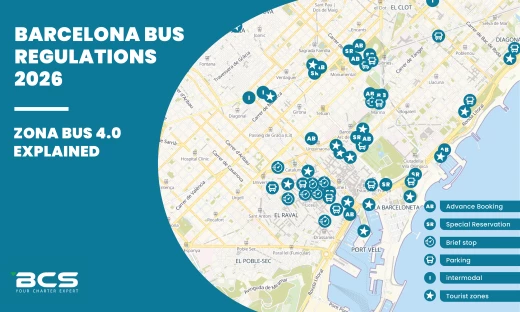
The city of Barcelona has implemented Zona Bus 4.0, a new model to manage traffic of tourist buses. It was officially launched on January 26th, 2026, after a rather short transition period, and became fully enforced on February 9th, 2026. The change comes to respond to disruptive tourism and mitigate excessive pollution that affects quality of life in historical regions.
To navigate this transition successfully, travel professionals should keep the following key takeaways in mind:
- Barcelona is enforcing measures to prevent disruptive tourism
- Zona Bus 4.0 is a new system to manage traffic in crowded areas
- Professional drivers have to purchase permits prior to the trip
- Travel operators need to inform the exact route that will be done
- Clients must be properly informed to prevent misunderstanding
In short, the new system requires professional drivers to book specific permits to circulate in crowded areas, and doing so requires informing trip details and making a payment beforehand, which gets a digital reservation to access designated bus zones. The city is changing its model from parking-based to access-based, which can cause confusion to drivers and clients at first.

Context: What Factors Caused the Change?
So far, tourist buses were able to drive directly to Barcelona's historical landmarks, such as Sagrada Familia. Drivers could search for available parking spots or specific stop areas where they would drop off passengers and leave afterwards. Delays would depend on availability; arriving buses just had to wait for a spot to vacate.
Now, with Zona Bus 4.0, drivers need to make a digital reservation prior to the actual trip. That is done through the SPRO professional app and also requires drivers to determine the exact route they will follow within the historical zone. Besides that, "stop & go" spots now have hourly caps; no access is permitted outside them.
In other words, access is no longer spontaneous there; drivers must use a regulated system that may be more bureaucratic but manages to reduce the quantity of vehicles in those areas, which helps reduce air and sound pollution there, and makes traffic more predictable, with fewer vehicles circulating there at once.
How Does That Affect Tourism Logistics?
Drivers and travel agents no longer can simply go to those regions. They need to plan the travel service in order to get the necessary permits. In fact, the new system requires a level of overall precision that is comparable to that of airports. Here's a breakdown of the consequences:
- Less flexibility: Drivers must align their service offerings with the available slots on schedule. It's no longer possible to accommodate delays by simply waiting at the spot.
- More precision: Professional drivers will need to inform the exact route they will follow, including all stops along the way. Those stops cannot be changed while the trip occurs.
- Difficulties for large groups: The reserved slots allow only 10 minutes for passengers to board or leave. That window is just too small to coordinate groups of ~150 tourists.
- Risk of missing slots: The short stop window is also problematic in case of heavy traffic or passenger delays. If the driver misses the allotted window, it cannot be extended.
- Limited rebooking: Since digital reservations sell out fast, it is virtually impossible for a tourist bus driver to purchase a new one, or change an existing one, right on the spot.
What Should Travel Professionals Know?
To keep it in a few words, drivers and travel agents cannot "wing it" anymore. They can still offer their usual services in Barcelona, sure, but only with adequate planning and without offering clients the possibility to make changes once the permits are issued.
- Plan ahead: Professionals must secure their reservations weeks ahead. They are quite limited and sell out fast, so booking only a few days in advance might not be enough.
- Learn the restrictions: Drivers need to book stops made at Park Güell, Hospital de Sant Pau, Pedrera, Sagrada Familia, Ciutat Vella, Port Olímpic, Drassanes and Font Màgica.
- Set time buffers: You can prevent delays from traffic issues by scheduling bus stops with longer intervals than usual. This way, you will not risk missing your reserved spot.
- Manage expectations: Clear communication with clients is essential. This is a whole new situation, and they are not expected to know it beforehand; keep that in mind.
- Think of options: Consider alternatives such as dropping tourists off outside special zones or planning the bus service along with walking or public transport on short areas.

What Is the Official Source of Information?
Barcelona's city council has created an official website to publish all information about that project. It shows a brief explanation focused on the advantages Zona Bus 4.0 is expected to bring, and shows support information such as a reminder of when the new system is going to be effective (February 9th, 2026). Everything is available in Catalan, Castilian and English.
Checklist for Group Travel Operators
Since the new rules for group travel in Barcelona have become so tight, we have written a handy guide that can help organize your work duties to properly serve your clients in this new environment:
Reservations
- Make sure that all drivers have proper access to the SPRO's official app for professionals.
- We recommend booking slots a month in advance, especially to visit peak landmarks.
- Ensure that all bookings are paid and confirmed before the trip day.
Scheduling
- Plan your route with the exact points where the bus will stop, so the booked spots will be aligned to them.
- Add 20–30 minutes to the normal driving time from one stop to the next to make up for delays.
- For large groups, assign a coordinator to manage timing.
Operation
- Check real-time navigation apps to anticipate delays.
- Have drivers confirm the necessary reservations before going on the trip.
- Prepare alternative drop-off points outside the restricted areas to prevent problems in case a reserved slot is missed.
Communication
- Be clear with clients that schedules are strict; being late may lead to missing a landmark.
- Offer options like walking routes especially for short distances.
- If there are group leaders, keep them informed of meeting points and contingency plans.
Post-Trip
- Keep track of past delays to adjust your buffer time.
- Update the company's protocols according to the new experiences.
- Keep copies of recent reservations and payments with drivers in case they need to prove their slot was properly reserved.
While the implementation of Zona Bus 4.0 in Barcelona represents additional rules to comply with, it does not have to be a problem. The best way to thrive in this new environment and keep offering top-quality service is by understanding those new rules in depth and changing your plans and protocols accordingly.
Frequently Asked Questions
Travel operators need to register on the SPRO’s official app for professionals. Then, they need to book an authorization for every trip they intend to do with stops at restricted areas, usually around landmarks. That authorization costs EUR 35 and grants permission to stop only at the exact points picked beforehand and within 10 minutes for every stop.
Many tourists visit Barcelona for parties and nightclubbing, so they end up being disrespectful and noisy. Besides, many people are buying houses and apartments in prestigious locations to rent on Airbnb, which is frowned upon by local residents. Last, but not least, the excess of cars and buses around the city brings significant air and noise pollution.
The city is enforcing traffic restrictions in crowded areas to lower pollution levels. To travelers, that means tour operators might announce longer ride times to prepare for delays, and highly restrictive routes. Once the tour is defined, they will not be able to make changes such as adding new stops because they cannot change the permit they issued.