Cities Where Business Trips Feel Like Vacations

Everyone loves vacations. Whether it's sitting by the sea, wandering through a beautiful city, or dancing in a local nightclub, being away from the routine environment gives you a sense of freedom. When you ask an elderly person what they'd do more in their youth if they had a chance, most of them would say "travel more". Craving for exploration is what made our species so powerful.
Years ago, traveling was slow and dangerous, yet now it's a part of everyday life - you can get to another country in a matter of hours. Business travel, similarly, is an inseparable part of a professional life: conferences, events, client meetings, exhibitions, and more. And sometimes, business trips can be exhausting. However, in the right city, even the tightest schedules can feel like time off. All thanks to the pleasant weather, convenient and well-working infrastructure, variety of leisure activities, and lovely atmosphere.
Since founding BCS Bus in 2012, we’ve had the privilege of connecting professionals across Europe – from Amsterdam to Barcelona, Berlin to Rome. With over 13 years of being in business, we’ve noticed a remarkable thing: our clients don’t just want the fastest and most convenient route from A to B, but they also want to experience the ambience of the city. In other words, “I want my business trip to cover my operational and recreational needs”. Since traveling is an integral part of the business reality, why shouldn’t it also be enjoyable?
At BCS Bus, we are committed to helping professionals travel with ease and confidence while making every journey as smooth as possible. As a European transportation company for corporate and group travel, we provide seamless connections between the continent's major business hubs. Our study analyzed nearly one hundred European cities, evaluating hotel prices, flight options, coworking spaces, and conference venues to see where business travel still feels a little like a getaway.
Business Traveling in Europe
The overall tourism trends have changed drastically since the COVID-19 pandemic occurred in 2019. Many countries imposed restrictions and proclaimed lockdowns. Thus, travelers, along with business visitors, were unable to cross the borders. The UN World Tourism Organization reported a 72% arrival drop in 2020. Moreover, employees had to work from home, and all meetings were held online via Zoom or Microsoft Teams. Tourist-based cities were losing revenues due to low arrivals, and the economic situation was getting worse.
When, thankfully, the pandemic was over and all COVID-19 restrictions were cancelled, the world could go back to its normal life. Employees who had to work remotely for a long time could go back to the office and continue their work in person. Companies could plan business trips again to hold conferences and important meetings abroad, or invite others to their home countries. Business trips involve various planning stages to go through, as the company needs to plan the overall budget by coming up with the most favorable accommodations, means of logistics, as well as renting suitable conference rooms and workspaces, meeting all business needs. While the whole tourism market is valued at $11 trillion, business travel spending should reach $1.57 trillion by the end of this year.
Key Findings at a Glance
-
1
Barcelona, Spain, has the best combination of business infrastructure, leisure activities, and tourist appeal.
-
2
Six out of ten cities in the top 10 are located in Southern Europe.
-
3
Germany and the Netherlands have the best business infrastructure overall.
-
4
Tourism demand strongly correlates with leisure appeal.
-
5
Mediterranean cities lead the Leisure Index because of the high sunshine exposure (averaging 2,700+ annual hours), as well as food and café cultures.
-
6
London ranks as the most visited city overall, but falls outside the top 10 for leisure due to higher costs, lower safety, and lower sunshine hours compared to Southern Europe.
-
7
Tourism Appeal scores peak in London, Paris, and Berlin, which collectively account for 41.4% of Europe's international overnight stays.
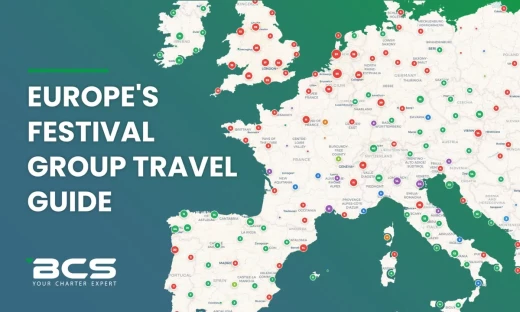
Interactive Map
How City Factors Affect the Business-Leisure Experience
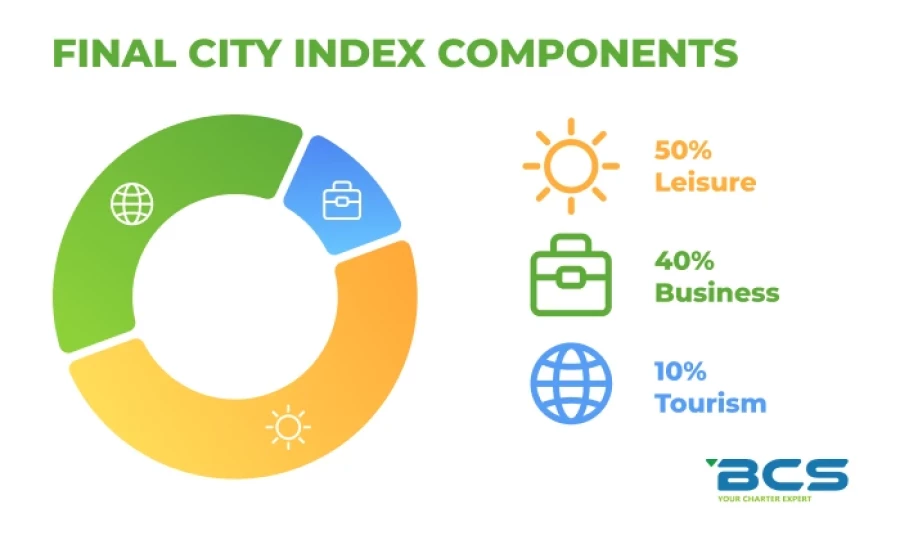
To see which cities have the most vacation-like feel, all while providing the best possible business infrastructure, our team created three indexes: the business-friendliness index, the leisure index, and the tourist appeal index. Weights were determined by each aspect's importance: 40% of business infrastructure, 50% of leisure activity potential, and 10% of how appealing the city is to tourists. They are not weighted equally because, despite the business infrastructure playing a crucial role in the business trip, an opportunity to have a cup of coffee or a glass of wine in a lovely cafe during the golden hour after the conference is what can make the trip truly feel like a mini-vacation.
Business Friendliness
This index represents how convenient each city's business-related infrastructure is. It's a combination of average hotel prices on a weekday for a 2-day trip in a mid-range hotel, the number of direct destinations from the closest airport (and the biggest one, if the city has multiple airports), the number of coworking places per 100 km², and the number of conference venues per 100 km². All of these parameters were equally weighted since all of them have equal importance in terms of how convenient a business trip will be.
Leisure
The leisure index shows how good each city is from a tourist standpoint. For each vacation, the most important part is the weather; even the most beautiful cities can offer much less if it's cold and raining. For this index, we used sunshine hours, number of bars & cafes per 100 km², number of tourist attractions per 100 km², and safety index. The weights were distributed as follows: 50% for weather, 30% for bar & cafe density, 10% for attraction density, and 10% for safety.
Tourism Appeal
This index's goal is to represent how appealing the city is to tourists. It weighs only 10% overall, but shows how interested people are in visiting the city. It's an equally weighted combination of Google searches for "visit" [city] and total overnight stays in the tourist accommodations for 2024.
Which European Cities Make Business Travel Feel Like a Vacation?
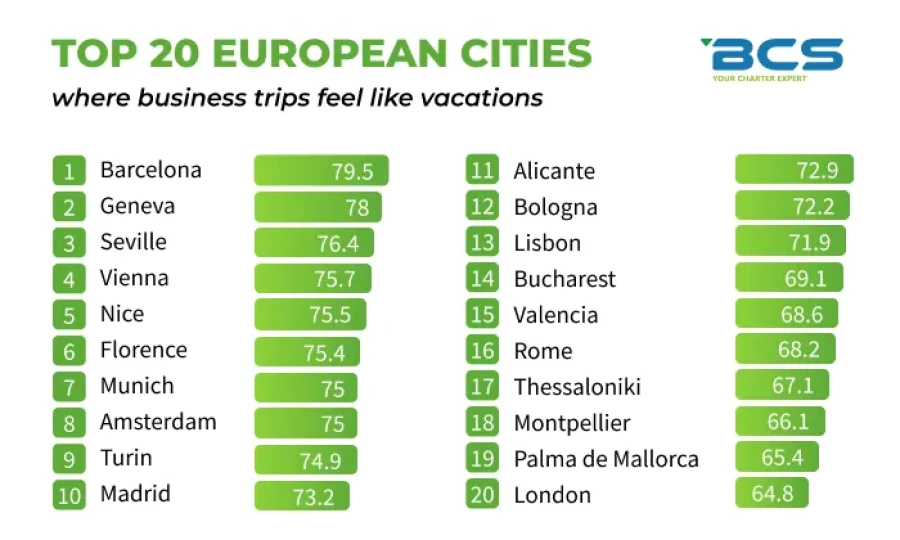
Barcelona, Spain
Bleisure index: 79.5
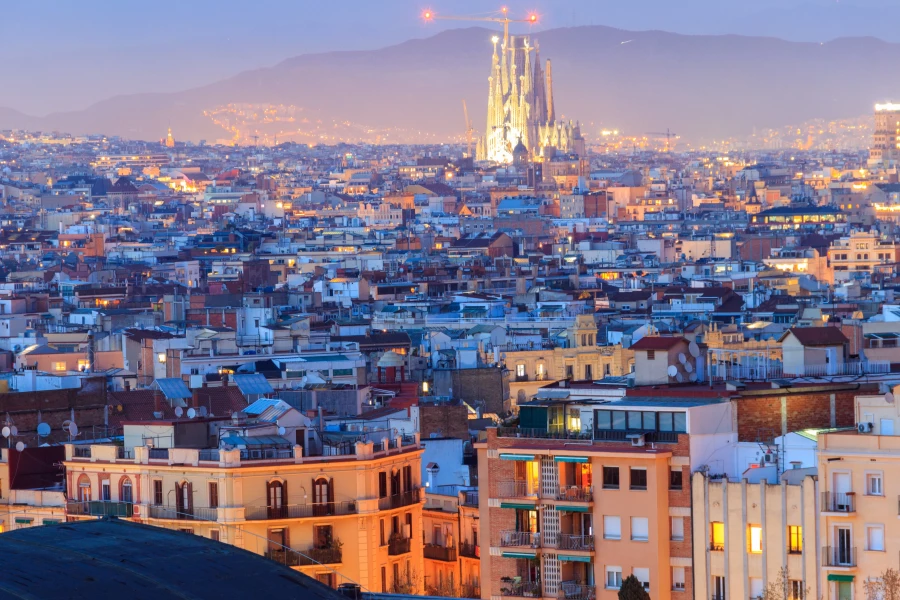
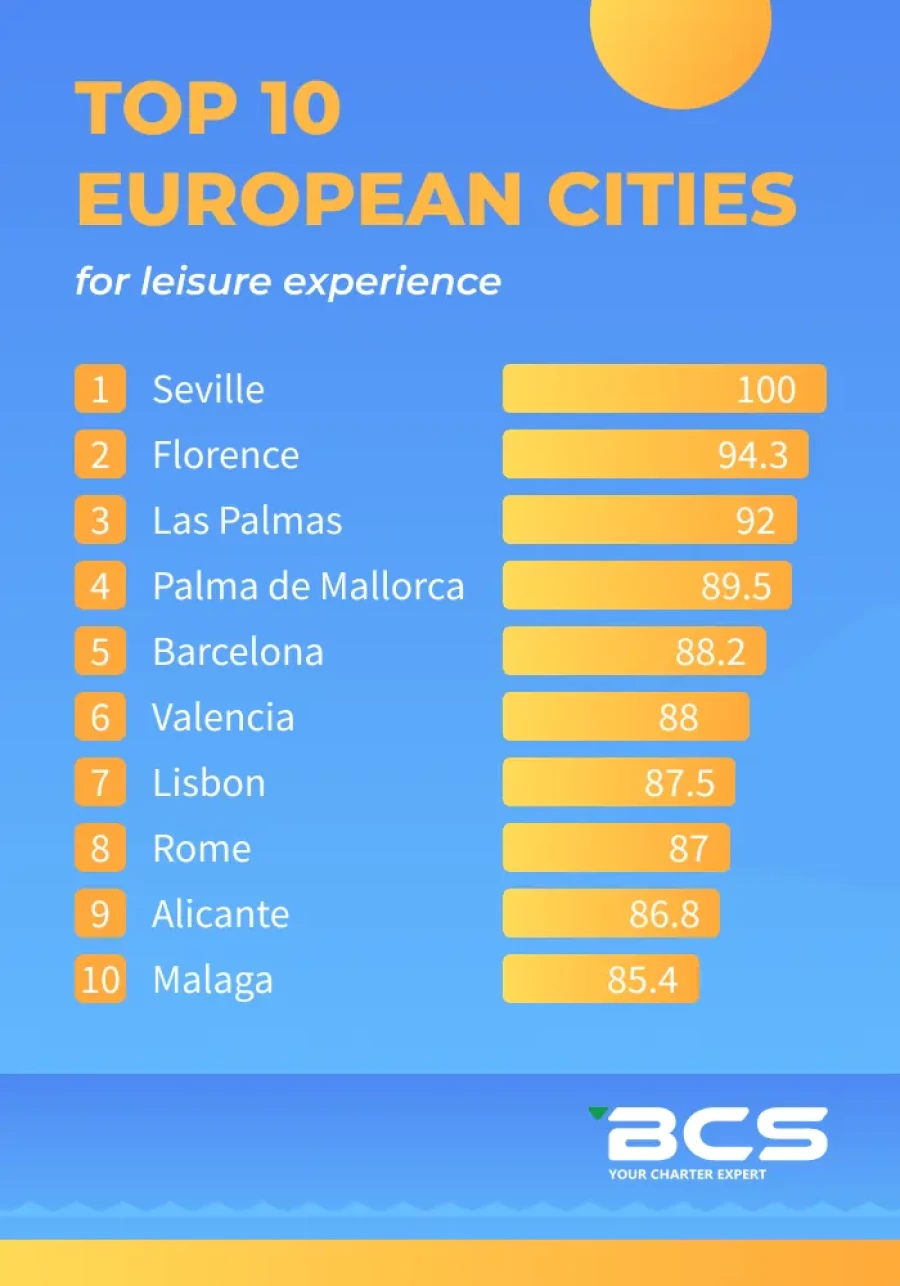
Barcelona has gained popularity in the recent decade among tourists, but also among entrepreneurs and corporations. In recent years, the city has become a hub of technological startups and creative minds, attracting talent from all over the world with an overall business index of 70.1. Moreover, Barcelona provides excellent access to the sea and supplies residents with loads of sunshine, making it an appealing destination for a regular vacation and a corporate event (leisure index - 88.2). In this city, a business trip will feel like landing in paradise!
Geneva, Switzerland
Bleisure index: 78
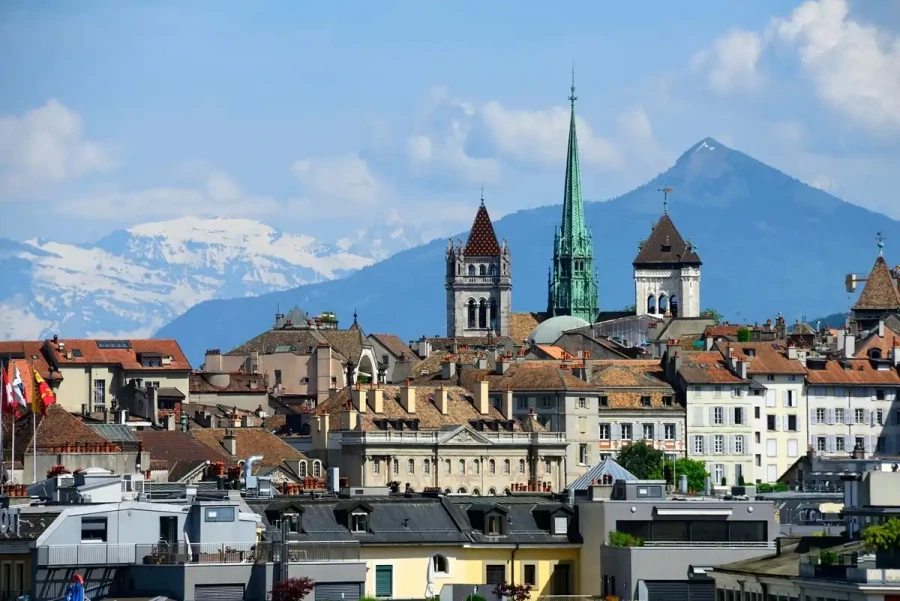
Geneva is a famous destination, where travelers can easily combine work-related tasks with leisure activities. The city offers 883 conference venues and 28 coworking spaces across the urban area, where travelers can find the best spot for working. Beautiful attractions and 107 cafes/bars around the city will help visitors to relax and reflect on the day in peace after a tough working routine.
Seville, Spain
Bleisure index: 76.4
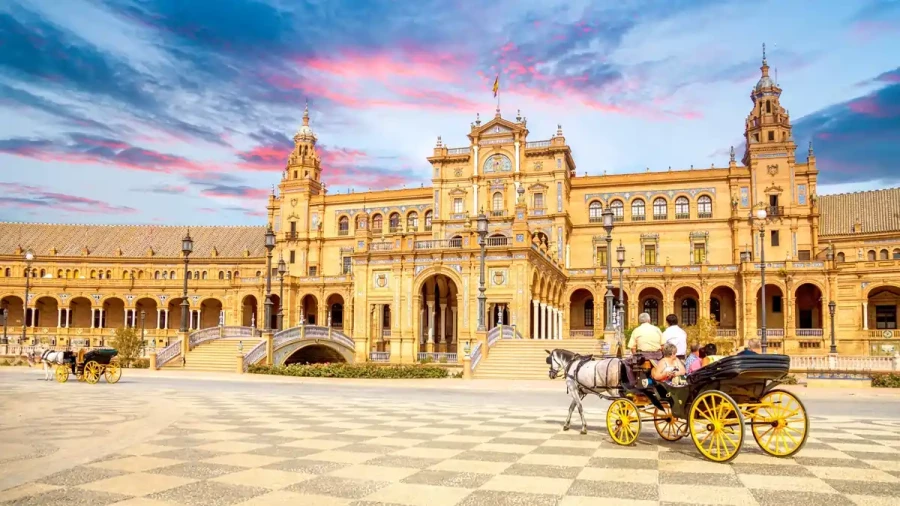
Seville, also known as a city of color, rhythm, and flamenco, secured the 3rd spot. For the last ten years, the city has continuously supported innovative companies in various industries, like aerospace, environment, and tourism. Situated in Southern Spain, Seville can offer a range of opportunities for a business trip, providing arrivals with easy access to coworking spaces and a variety of entertainment. Moreover, the city is considered the most suitable for having a great leisure as Seville demonstrates a leisure index of 100 with 267 bars and cafes around the city, as well as 94 attractions to be explored by visitors of this fascinating city.
Vienna, Austria
Bleisure index: 75.7
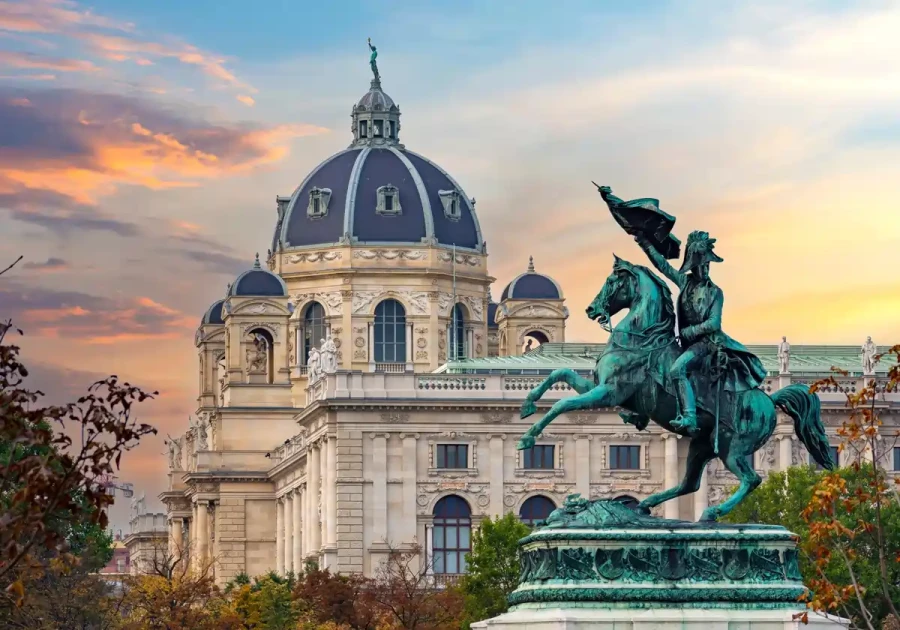
A business trip to Vienna feels like a cultural gateway, where the border between work and relaxation is blurred. After a long day spent in business meetings, travelers can experience Vienna's nightlife by choosing one of 471 bars and cafes available within the urban area, or explore any of 457 cultural attractions during the day. With an overall business index of 67.2, Vienna welcomes business visitors with 857 conference halls to be used for important meetings, and 98 coworking spaces to be used for a more convenient working environment.
Nice, France
Bleisure index: 75.5
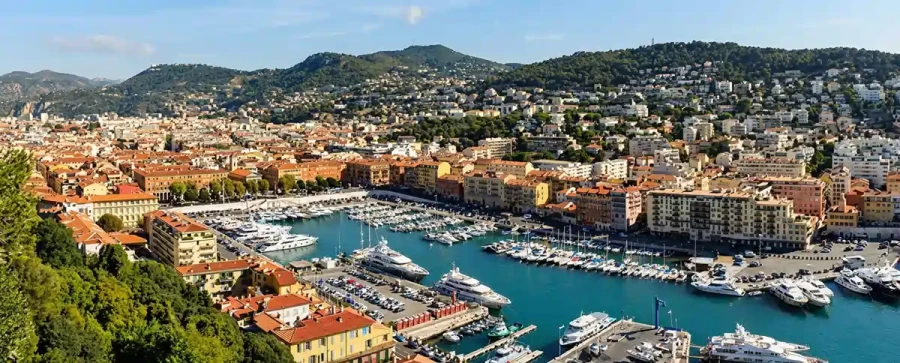
The city in the South of France doesn't need an introduction. It is a city of flamboyant yachts, expensive cars, and delicious food. Nice, with a total leisure index of 81.2, has been attracting and still is attracting wealth from every corner of the planet with 317 attractions, and 106 bars and cafes, making it abundant in experiences for both business people after a long working day and travelers, who stay in Nice for a vacation. Although the city leans more towards serving the wealthy individuals, it can still be considered an amazing destination for a business event or corporate trip.
Region Diversity
The diversity across regions suggests that cities, which are considered more like business centers and engineering hubs, have more options available for a convenient working experience. Cities like Vienna, Geneva, and Munich, with a high overall business index, can offer visitors plenty of coworking spaces and conference halls. Thus, workers from abroad can do their work-related tasks in comfort.
On the other hand, cities like Seville, Florence, and Madrid are more intended for vacation purposes. Although they have coworking spaces and conference halls within urban areas, these cities are more meant for relaxation. Thus, tourism-based cities can offer visitors tons of cultural attractions and entertainment experiences to have an unforgettable time.
The Best European Cities for Business Infrastructure
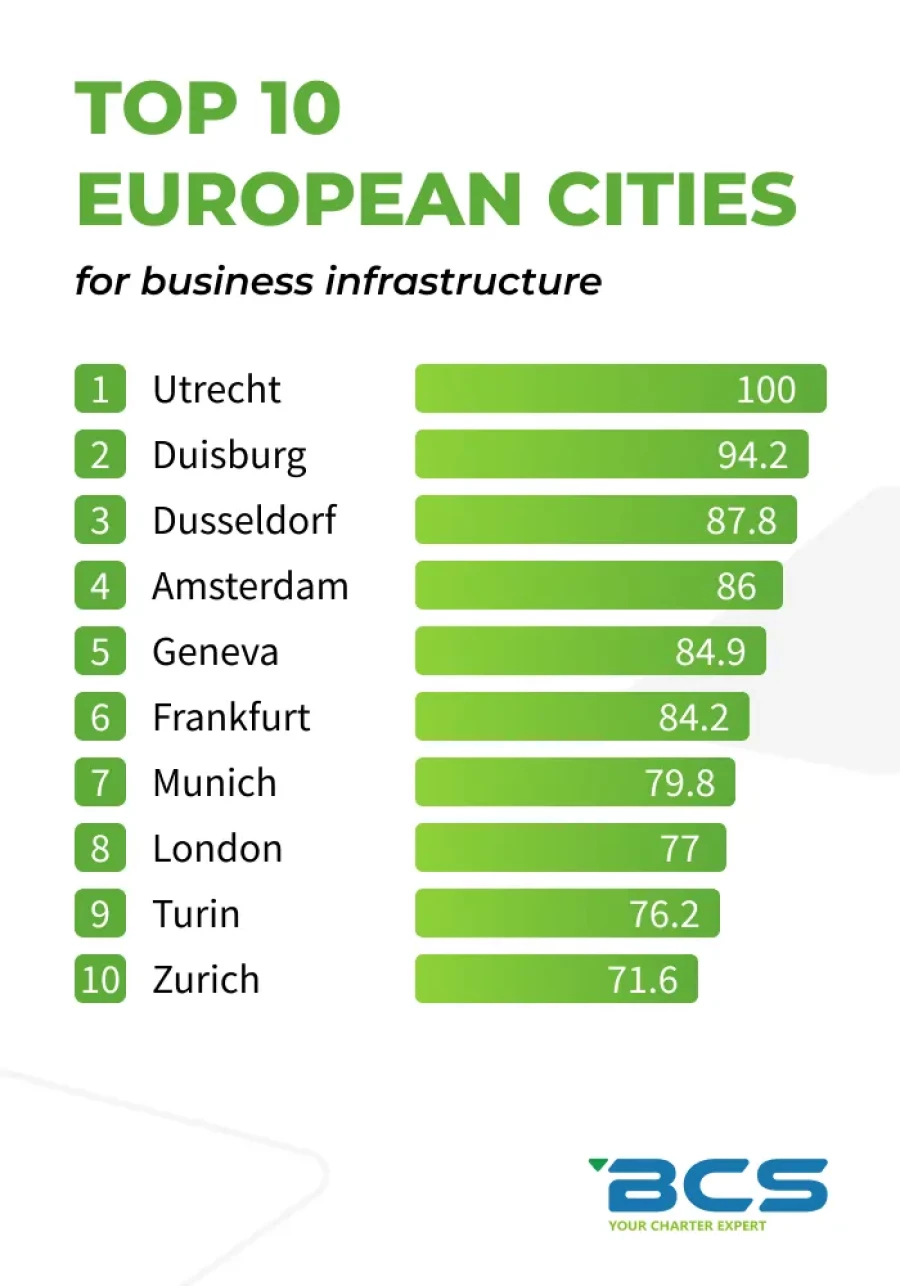
Various factors impact what makes a city perform so efficiently in serving the business environment, including but not limited to the city's area. For instance, Munich is a great destination for business trips, offering 29.54 coworking spaces and 339.43 conference halls per 100 km², while travelers of its Rhine-Maine counterpart, Frankfurt, have 33.85 coworking spaces and 461.82 conference halls per 100 km². Both cities are renowned as business centers of Germany, yet, when looked closely, it becomes transparent that the city area and accessibility to the business demands may flip the perception and show the leader.
On the other hand, Southern countries like Spain, Greece, and Italy showcase weaker results regarding the business infrastructure. These countries are among the top destinations for tourists who seek sunbathing and vibrant culture; therefore, there is more catering to these needs, rather than business. Naturally, Amsterdam (453.20 per 100 km²) will provide far better access to coworking spaces and business necessities compared to Cordoba, with 10.76 conference halls per 100 km², or Athens, which offers 62.83 conference halls per 100 km². There's no bad or good in this context, as each city in each country has its own purpose and serves the different needs of the visitors.
The Best European Cities for Leisure and Work-Life Balance
It wouldn't come as a surprise that the cities in Southern Europe provide higher indices for leisure, making them the most attractive to combine business and entertainment. In Rome, Italy, there are 1,803 cafes and bars, 953 attractions, and 2,473 sunshine hours a year, which sounds like a neat choice to work and enjoy the results afterwards under the evening sun while sipping on red wine. Similarly, Barcelona or Seville offer numerous hours of sunshine and a variety of cafes, bars, and attractions. Moreover, visitors who want to discover cities' cultural heritage are welcomed with many fascinating attractions that tell stories of a unique past, all to be explored under a warm sun.
In contrast, cities in Central, Northern, and Eastern Europe tend to have fewer options for entertainment and relaxation. As a good example of a city balancing both leisure and work is Cologne, Germany, which has 284 cafes and bars, 98 attractions, and 1,504 sunshine hours, which signifies that the city can satisfy all business needs, while also giving plenty of room to explore and enjoy it as a tourist. Some cities, like Malmö, Sweden, are less adapted for leisure, with only 78 attractions and 1,920 sunshine hours, which does not provide the same level of the work-leisure balance as many other southern cities. It can be attributed to the infrastructure of such cities that is more intended for business-related errands, rather than amusement, since such cities have more business centers and headquarters of big companies.
The Costs of Business Travel in Europe
In planning and budgeting a business trip, the price of accommodation plays a significant role, especially if a big group travels. The pattern price for 2 nights spent in a hotel (on a weekday) varies significantly in each European city, showing an average price of 292.22€ nationwide.
Big cities, especially those that are tourist-oriented, demonstrate a high average price for booking a 2-night stay in a hotel. Paris has an average price of 495.36€, while the average price in Malaga is 428.04€. Mainly, cities from Spain, Italy, and France, the main tourist-oriented countries, have one of the highest average prices in Europe for hotel bookings.
On the contrary, business-oriented cities, such as Berlin (354.62€), Warsaw (317.61€), and Helsinki (301.51€), have a price closer to the EU average, meaning that visitors will be able to book accommodations with a decent level of comfort and a convenient location. Additionally, small European cities offer affordable hotel prices, lower than the national average: Varna (79.38€), Riga (100.8€), Aarhus (192.9€), and Cordoba (198.72€). When planning a business trip to a small European city, travelers will be able to book a hotel for a fair price and spend the rest of the money on experiencing cultural and entertaining activities.
The Cities Most Suited for Corporate Events and Conferences
When planning a business trip in Europe, corporations always seek to secure the best deals for airplane tickets and conference room rentals. The more choices there are, the higher the chance of picking the most favorable deal without spending a whole fortune when planning the budget.
London leads in the number of conference halls, demonstrating an impressive number of 4,710 options available to choose from, followed by Paris (2,601) and Utrecht (1,629). Also, London has the highest number of coworking spaces (1,271), convenient for individual work, sharing the TOP 3 together with Duisburg (850) and Barcelona (194).
The flight connectivity across Europe is extremely important for planning the most efficient way to get to the target city. Frankfurt, with 285 total direct flights, leads in the best connectivity across European countries, while Paris (277) and Amsterdam (267) are not so far behind.
Talking about the concentration of conference halls and coworking spaces within a city, Duisburg, with 364.62 coworkings per 1,000 km², London (73.17 per 1,000 km²), and Amsterdam (40.21 per 1,000 km²) demonstrate the highest availability within the urban area. Utrecht (1,111.79 per 1,000 km²), Geneva (1,071.6 per 1,000 km²), and Bochum (990.13 per 1,000 km²) have the best concentration of conference halls in the city area.
City Factors That Reduce Stress
As is known, walking and sun exposure can have an extremely positive effect on humans, and this finds a reflection in culture. For instance, people from the Mediterranean tend to live longer than in the colder parts of Europe. That's why cities like Seville (3000+ annual sunshine hours), Barcelona (2500+), and Nice or Florence (around 2500) rank that high. Also, southern European has cafe culture, something northern Europeans don't have - Helsinki, having the highest cafe & bar density in Northern Europe (98 per 100 km²), is still drastically outperformed by the South. And when it comes to the stress factor, having a walkable city with great weather and a variety of places to sit and enjoy the moment with your friends or colleagues makes a huge difference.
Conclusion
Effortless trips always feel like bliss. There is a multitude of cities and countries that can offer a smooth transition from hustle and bustle to serenity. Southern Europe concentrates a lot of entertainment coupled with tons of sunshine, making it a great choice to plan an event that will satisfy both business and leisure needs. Whereas the cities in Central or Northern Europe provide quick access to business-related demands. Naturally, if you're an attendee, you can't choose the city where your trip will feel like a nice holiday. Still, suppose you're about to organize an event. In that case, there are plenty of alternatives to go around to make the stay of your attendees extraordinary and filled with the sense of a small vacation, elevating their experience and enjoyment of a work trip.
Data Table
Methodology
Our study ranked European cities where business trips feel most like vacations by combining three key dimensions: Business-Friendliness, Leisure, and Tourism Appeal. Each city's Business-Friendliness Index considered average weekday hotel prices, number of direct flights, coworking spaces, and conference venues (equally weighted). The Leisure Index factored in sunshine hours (50%), density of bars and cafés (30%), tourist attractions (10%), and safety (10%). The Tourism Appeal Index measured global search volume for "visit [city]" and total tourist overnight stays in 2024 (equally weighted).
All metrics were standardized per 100 sq. km using Eurostat's city boundaries and normalized for comparability. The final score combined Business-Friendliness (40%), Leisure (50%), and Tourism Appeal (10%) into one composite ranking. Data were sourced from trusted platforms, including Eurostat, Numbeo, TripAdvisor, Wikidata, Amadeus, Ahrefs, FlightsFrom, Coworker, and Cvent, collected between September and October 2025.
Want to explore the data behind the rankings? Our full report includes detailed methodology, complete city scores, and raw data for all European cities analyzed.